
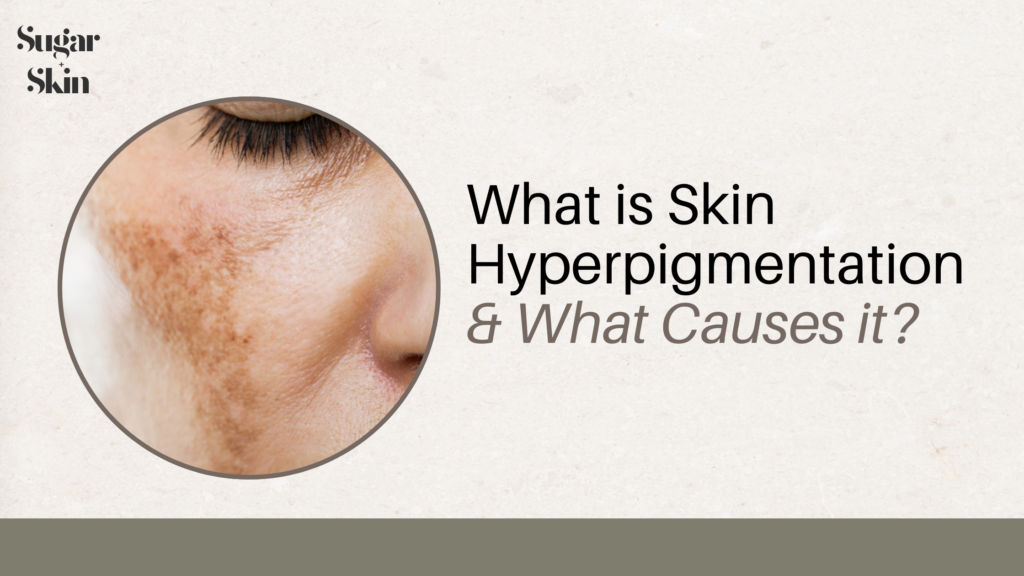
Those stubborn dark spots that just won’t fade? You’re not alone — and you’re not doing anything wrong.
Hyperpigmentation is one of the most common skin concerns we see, and understanding why it happens is the first step toward treating it effectively.
Let’s break down the biggest factors that contribute to hyperpigmentation, how they affect your skin, and what you can do to get your glow back.
What Is Hyperpigmentation?
Hyperpigmentation occurs when your skin produces excess melanin, the pigment responsible for skin color. This excess pigment shows up as dark spots, patches, or uneven tone.
Important note: hyperpigmentation is often a reaction, not a skin “flaw.” Your skin is responding to something — and once we identify the trigger, we can create a plan to manage it.
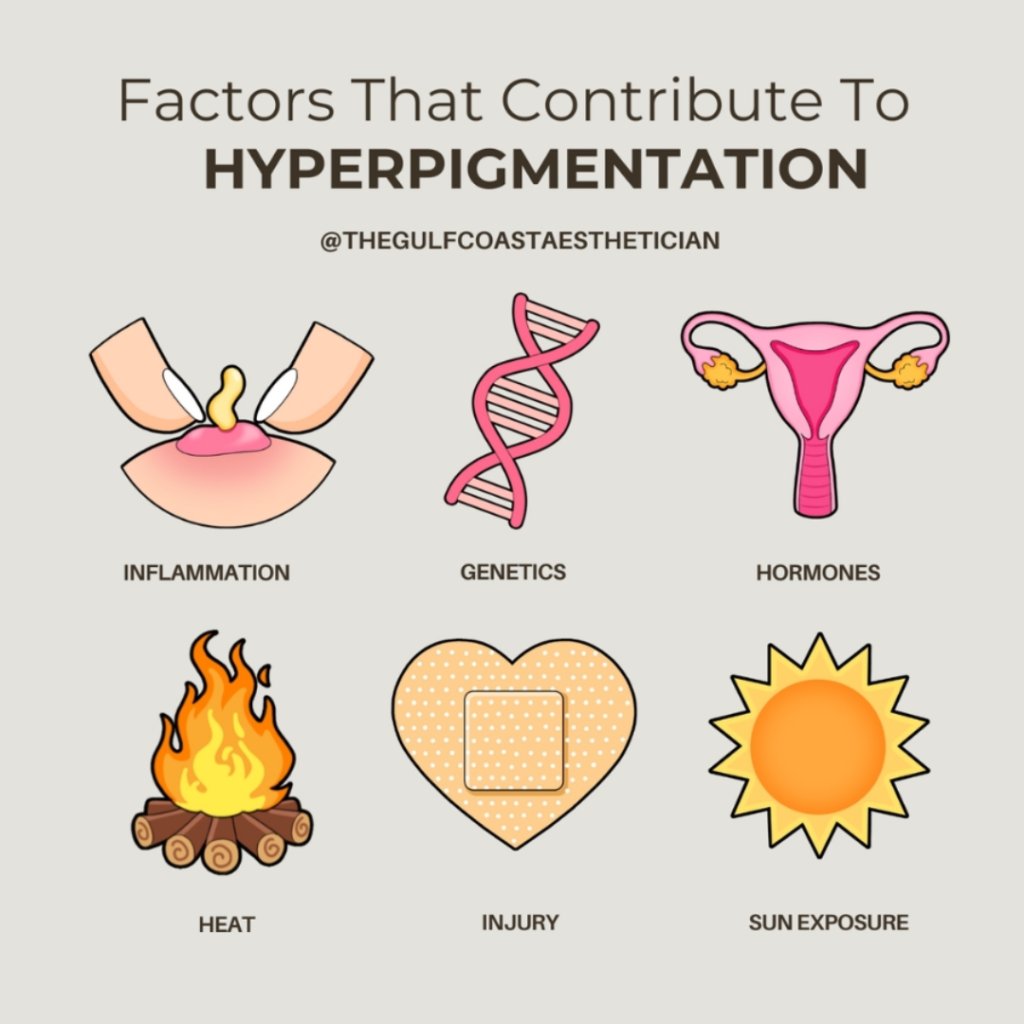
Top Factors That Contribute to Hyperpigmentation
☀️Sun Exposure
The number one culprit.
UV rays stimulate melanin production, which can worsen existing dark spots and create new ones. Even brief sun exposure — and yes, even on cloudy days — can undo progress if skin isn’t protected.
✨What helps: Daily sunscreen, hats, shade, and post-treatment sun care.
💫Hormonal Changes
Hormonal shifts from pregnancy, birth control, or other changes can trigger melasma, a stubborn form of pigmentation that often appears on the cheeks, forehead, or upper lip.
Because hormones are involved, this type of pigmentation requires a thoughtful, customized approach — not aggressive treatments.
🔥Inflammation & Acne Scarring
Breakouts, picking, irritation, or even aggressive treatments can cause inflammation that later turns into dark spots — a condition known as post-inflammatory hyperpigmentation (PIH).
This is especially common after acne or improper aftercare following waxing or exfoliation.
✨What helps: Calming, anti-inflammatory skincare and gentle treatments that support healing.
🧬Genetics
Some skin types are naturally more prone to hyperpigmentation due to genetics. If dark spots run in your family, you may notice pigmentation appears more easily — and lasts longer.
The good news? While genetics influence susceptibility, pigmentation can still be managed with the right routine.
🌡Heat
Heat alone — even without sun — can trigger melanin activity. Hot yoga, steam, excessive sweating, and warm climates (hello, Pensacola!) all contribute.
This is why pigmentation can worsen in summer or in humid, coastal environments.
🩹Injury or Skin Trauma
Cuts, burns, bug bites, aggressive exfoliation, or improper treatments can all lead to pigmentation during the healing process.
When skin is injured, melanin production increases as part of the repair response.
Signs You’re Dealing With Hyperpigmentation
- Flat brown, tan, or gray patches
- Dark spots that deepen with sun exposure
- Acne marks that linger long after breakouts heal
- Uneven tone that doesn’t fade with basic skincare
What You Can Do About Hyperpigmentation
Treating pigmentation isn’t about quick fixes — it’s about consistency and care.
✔ Daily sunscreen is non-negotiable
✔ Gentle exfoliation (not overdoing it)
✔ Anti-inflammatory, barrier-supporting products
✔ Professional treatments tailored to your skin type
✔ Patience — real results take time
This is where customized care makes all the difference.
Why a Customized Skin Plan Matters
Hyperpigmentation is not one-size-fits-all. Treating hormonal pigmentation the same way as acne scarring or sun damage can actually make things worse.
At Sugar + Skin, we focus on
- Identifying your specific triggers
- Supporting skin healing (not stressing it)
- Creating a plan that works with your lifestyle and environment
Because glowing skin isn’t about harsh treatments — it’s about smart ones.
Ready to Even Out Your Skin Tone?
If hyperpigmentation has been frustrating you, you don’t have to figure it out alone. With the right approach, dark spots can fade, and your skin can feel balanced again.
Start your personalized pigmentation plan
Let’s bring your glow back — confidently and safely